Subscribe Today
Get innovative nonprofit solutions delivered directly to your inbox via monthly blog posts and our quarterly newsletter.
"*" indicates required fields
Community First: Why Relationships are Advance Carolina’s Most Powerful Policy Tool
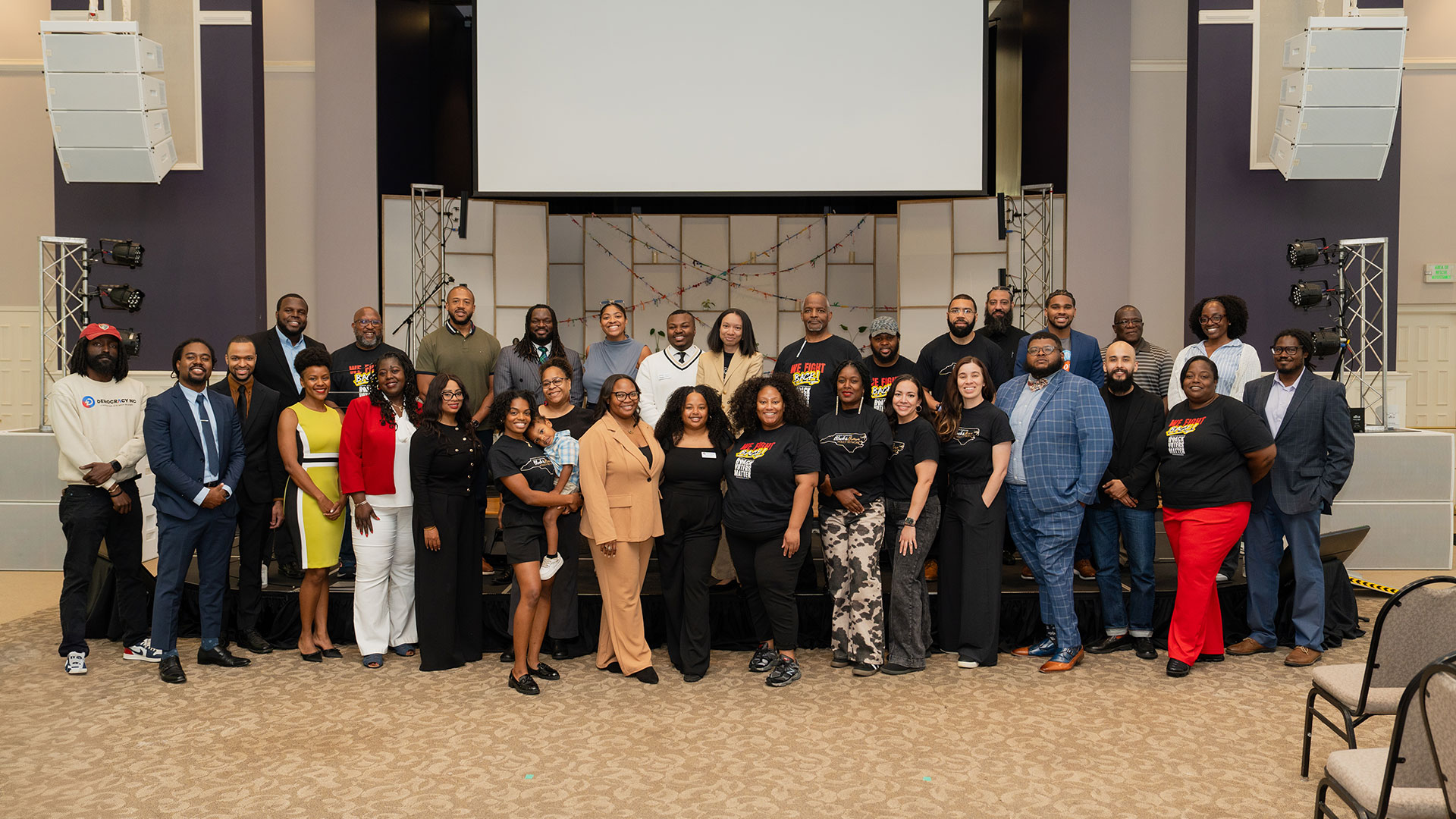
The policy landscape shifts daily. Funding pressures are relentless. And yet Advance Carolina keeps showing up, not just during election cycles, but year-round, in living rooms, county seats, and advocacy halls across North Carolina.
That consistency isn’t accidental. It’s the strategy.
We sat down with Policy Director Jovita Lee Miller, Ed.D., MPA, to talk about county-level organizing, the power of language access, and why authentic relationship building is the only infrastructure that truly lasts.
About Advance Carolina: Rooted in the 25-year legacy of the North Carolina Black Alliance, Advance Carolina is a 10-year-old civic engagement organization. It serves NC communities across the Southwest, Triangle, Triad, and beyond through continuous, year-round engagement, not just when elections are on the horizon.
Policy that Reflects the Communities it Serves
Most civic organizations show up when the stakes are highest. They disappear when they’re not. Advance Carolina’s regional staff work differently. They maintain ongoing relationships with community members all year, asking what issues matter most, what people are worried about, and what would actually improve their lives.
“During election cycles, that looks like phone banking and canvassing,” Miller explains. “But off-cycle, we’re still doing deep canvas conversations, trying to figure out what specific issues these community members care about most.”
At the center of this work is the Black and Brown Policy Network — a body that analyzes and communicates policy solutions at the local level, where change happens fastest, and impact is most immediate.
This isn’t abstract policy work. Miller describes their Advocacy Day teach-ins as a deliberate corrective to a frustrating pattern. Organizations ask communities to mobilize without explaining why.
“We ask people to do a lot of things and mobilize them, but we don’t actually take the time to explain why we need you to show up at the General Assembly,” Miller says. “What is going to be the tangible impact?”
“The General Assembly shouldn’t be anywhere scary. That’s y’all’s house. They work for you, so go talk to your employees and let them know what’s going on in your community.” — Jovita Lee Miller, Ed.D, MPA · Policy Director, Advance Carolina.
Language Access Isn’t a Nice-to-Have. It’s Accountability.
After building authentic relationships, Advance Carolina turned to another critical form of inclusion: language access.
About 18 months ago, Advance Carolina partnered with The INS Group to address a real gap. The organization lacked in-house capacity to serve Spanish-speaking community members, even as that inclusion was central to their mission.
The change was immediate and visible.
“When community came to join us, they felt part of the conversation,” Miller says. “They understood the materials, and it was available in a language they could follow.”
But the impact went beyond the events themselves. Through its partnership with The INS Group, Advance Carolina ensured that every touchpoint, fliers, materials, and outreach, was available in Spanish before community members ever walked through the door. That meant attendees weren’t waiting for catch-up summaries, weren’t falling behind in the room, and weren’t made to feel like guests in their own advocacy.
The results were tangible: more diverse attendance at Advocacy Day and community events. Bilingual event promotion signaled belonging before people even walked in the door. Community members reported in their own words that they felt genuinely included, not just present.
For Miller, the accountability piece is what matters most.
“It kind of keeps us accountable. If we’re saying that our priorities are Black and Brown communities, then a part of our responsibility is making sure that all of the folks we say we represent can meaningfully participate.”
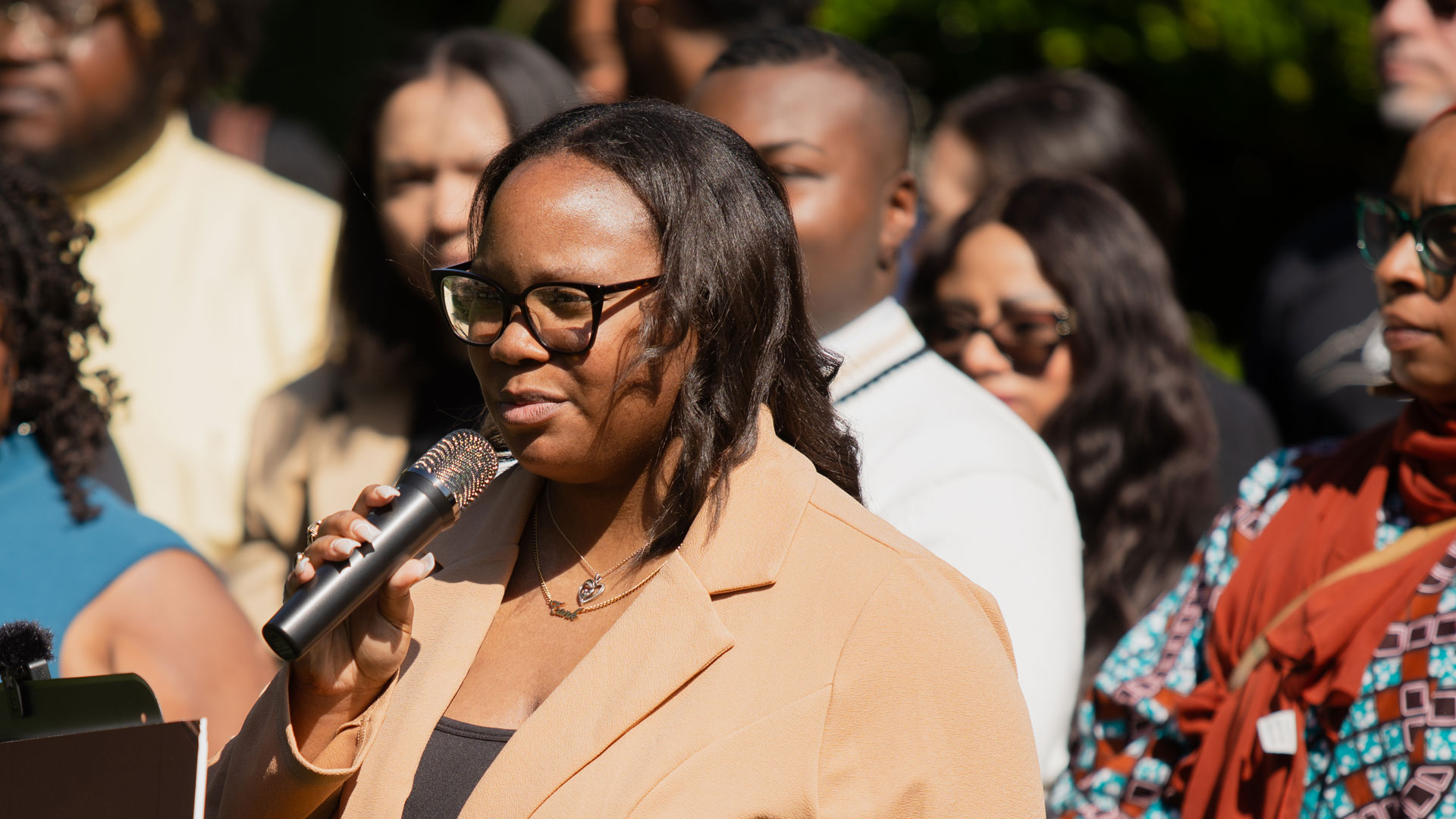
Jovita Lee Miller, Ed.D., policy director for Advance Carolina, speaks during the Black and Brown Policy Network’s Advocacy Day in front of the General Assembly.
Navigating Misinformation in a High-Stakes Moment
When policy shifts daily, and media incentives favor alarm over accuracy, community organizations carry an enormous responsibility to get things right. For Advance Carolina, the highest-stakes communication challenges cluster around two areas: criminal justice and immigration and democracy-related topics like voter ID laws, registration processes, and non-citizen voting myths.
“We want to be particularly clear with the community,” Miller says, “especially around what has not happened yet but has a threat of it. Being very clear: this is actually where we are.”
Their materials don’t just track legislation; they label it. Supported. Opposed. Stalled. That last category matters enormously.
“A lot of times, what they see is that a lot of the bill numbers on the news are actually stalled. They’re not the law. But the news isn’t clarifying that point.”
The work is ongoing myth-busting, delivered plainly: “These are the laws that are on the books. Here’s what’s not real, here’s what’s not true. Sometimes it’s just buzzwords you’re hearing in the media.”
Local Wins Aren’t a Consolation Prize
With federal and state progress often gridlocked, Advance Carolina has leaned hard into local wins, not as a fallback, but as a genuine strategy for building power and proving what’s possible.
“You’re probably going to see what city councils and county commissioners are doing faster than what you’ll see in the General Assembly, and definitely faster than the federal level,” Miller says.
One concrete example: Orange County’s one-year moratorium on data centers. In eastern North Carolina, communities like Halifax County have long watched development get “plopped” in their region without meaningful input or benefit. That local win carries real weight: a lesson, a precedent, a proof of concept that can travel.
“There’s now a lesson learned from that moratorium process that they can actually implement in Halifax County. Those are the types of conversations and connections we’re trying to make while our federal and state government gets its life together.”
Trust Takes Years. That’s the Point.
Sustaining this local momentum depends on something deeper: building trust that lasts.
Ask Miller what she wishes more organizations understood about sustaining grassroots trust, and her answer is immediate: it’s not a tactic. It’s a commitment measured in years, not campaigns.
“Our Alliance is 25 years old this year. Advance Carolina is 10. This was not overnight work.”
The organization has built credibility by showing up for communities, even when it wasn’t tied to an organizational goal. It listens, supports, and is simply present. That consistency pays off both ways. Communities trust Advance Carolina enough to share what’s really happening, and Advance Carolina brings that unfiltered, accurate intelligence to elected officials who need to hear what communities actually say—not what talking points assume.
“We don’t want to become organizations where we’re creating a narrative outside of a relationship with the communities we say we serve.” — Jovita Lee Miller, Ed.D, MPA · Policy Director, Advance Carolina.
The Real Case for Multilingual Investment
For nonprofits still weighing whether multilingual support is worth the investment, Miller draws a pointed parallel most organizations would do well to sit with.
“A lot of our work is rooted in the frustration that elected officials speak for us. They come up with narratives we didn’t say. But we also can’t become organizations that do the same thing.”
Multilingual access closes that gap. When people can engage in their own language, they stop being passive recipients of someone else’s advocacy. They become active participants, shaping it.
“Being able to create things in folks’ language, that they can understand and follow themselves, allows for more opportunity for authenticity and a real relationship,” Miller says.
And ultimately, she argues, the investment isn’t separate from the mission. It is the mission.
“Policy doesn’t work when it’s written about communities instead of with them. People inform policy. It’s not enough to write something and hope it works. Creating access lets communities follow through on the process themselves.”
That’s not a nice-to-have. That’s the whole point.
Join Advance Carolina in building authentic, accountable community power—engage, participate, and be the voice shaping North Carolina’s future.
Ready to reach every community you serve? The INS Group provides strategic planning, translation, and interpretation services that help mission-driven organizations communicate with authenticity and impact. Contact us today.