Subscribe Today
Get innovative nonprofit solutions delivered directly to your inbox via monthly blog posts and our quarterly newsletter.
"*" indicates required fields
Community is the Strategy: How Nonprofits are Building Power from the Ground Up
“Nonprofits proved themselves to be extraordinary warriors. They kept serving. They pivoted and innovated. They showed up relentlessly for communities.”
— Nonprofit Finance Fund, 2026 Nonprofit Trends Report
What drives a nonprofit to keep going when funding tightens, demand rises, and the landscape shifts beneath its feet? More often than not, the answer is the same: community. Across the country, organizations of all sizes are doubling down on community building, not as a feel-good add-on, but as a core operational strategy. And the data suggests it’s working.
Why Community Building is Having its Moment
According to the Sustained Collaboration Network, 73% of nonprofits that worked together with other organizations achieved measurable success, including expanded services, increased funding, and improved program outcomes. Research published by Candid in 2025 reinforces this: nonprofits that consistently engage their communities and act on feedback are better positioned to withstand disruption, because the community itself becomes a source of both direction and support.
What it Looks Like at Every Level
Community building is not one-size-fits-all. It looks different depending on the scale and focus of the organization, but the underlying principle is the same — relationships precede results.
At the grassroots level, the most effective organizations show up before a crisis. Small nonprofits conduct listening sessions, host community tables, and embed themselves where constituents gather, such as faith communities, schools, and local businesses. Trust is high and feedback loops are fast because the line between staff and community is often subtle by design.
At the mid-size level, nonprofits are forming coalitions. A 2025 Stanford Social Innovation Review case study follows five hunger-relief nonprofits in Contra Costa County, California, including the Food Bank of Contra Costa and Solano and Meals on Wheels Diablo Region, formally aligned under a shared banner rather than merging after recognizing that food insecurity in their county was worsening despite years of parallel individual effort. They built shared data infrastructure, including a food equity “heat map” identifying pockets of unmet need. The result: reduced duplication, more targeted services, and the ability to recruit bilingual volunteers and reach non-English-speaking neighborhoods that had previously been missed entirely.
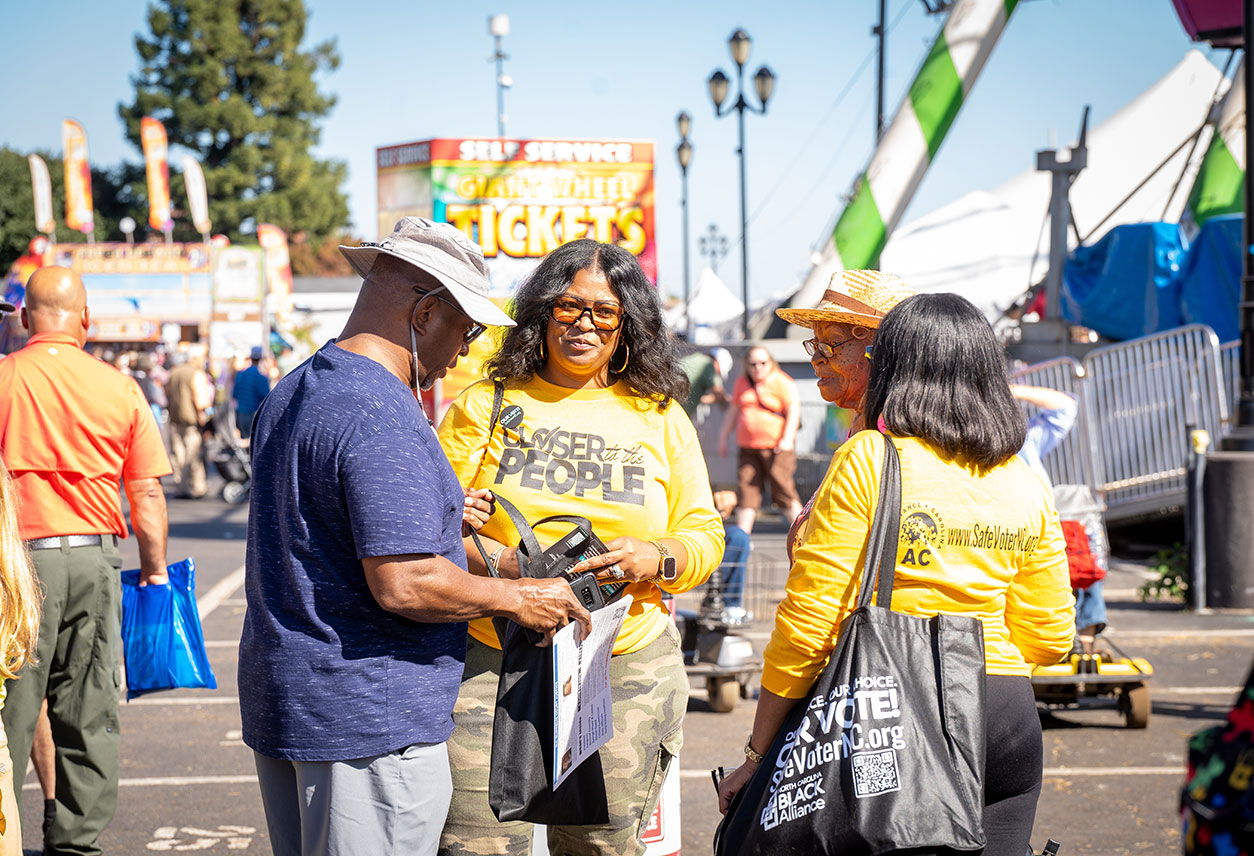
At the statewide level, Advance Carolina offers a compelling model. This Black-led 501(c)(4) in North Carolina builds Black political and economic power using a county table model, placing trusted local organizers in communities across the state to lead engagement from within. In 2024, the results were significant: their organizing contributed to critical down-ballot wins, including the election of progressive-minded candidates to governor, secretary of state, attorney general, and superintendent of public instruction, while breaking the veto-proof supermajority in the NC House. Ground-level relationships built county by county underpinned this statewide outcome.
When Community Building Works, the Outcomes are Tangible
When community building is done with intention, it produces outcomes that go beyond warm feelings. It shifts power, shapes policy, sustains funding, and expands reach. A February 2025 Yale School of Management study found that shared community is one of the strongest motivators for sustained giving, and that donors are drawn to organizations demonstrating real connection to the people they serve. Research from Bloomerang echoes this: donors want to see their impact and feel part of something bigger. Community-rooted organizations are uniquely positioned to deliver that because the community is right there to tell the story.
Reaching Everyone in the Room and Beyond
One piece of community building that organizations often overlook until it becomes a barrier is language access. According to U.S. Census data, 21.5% of people in the U.S. speak a language other than English at home. And by 2045, ethnic communities will represent the national majority. Any community-building strategy that ignores linguistic diversity is incomplete by definition.
The evidence is clear: language barriers don’t just create friction — they make services invisible. In January 2025, the NYC Council and New York Immigration Coalition responded to that reality by launching the first-ever NYC Community Interpreter Bank, deploying $1.4 million across legal services, navigation sites, and over 60 nonprofits to expand language access across the city. When people can engage in the language they speak, they show up.
Language access means making every touchpoint accessible: the intake form, the town hall, the orientation, the case worker conversation. When language support is in place, attendance rises, trust builds faster, and feedback gets more representative. The INS Group can directly support your organization through written translation, localized signage and flyers, and live interpretation for meetings and events. You want to reach the whole community. We help make sure you do.
The Bottom Line
Community building is no longer a soft skill. It’s the infrastructure that makes everything else sustainable. The organizations investing in relationships, building coalitions, and showing up at the neighborhood level are the ones building the trust and capacity to outlast any disruption. And when those organizations also ensure that every member of their community can access their work in the language they speak and in formats they can use, they are not just doing better outreach. They are building a stronger, more representative movement.